

Before hiring a digital marketing agency in Davie, ask one operational question: does the customer come to you, or do you go to the customer? A shop needs people to find the correct entrance and understand when they can visit. A mobile service needs requests from addresses it can actually serve. Both may need a website, local search visibility, and advertising, but the page content, contact process, and definition of a useful inquiry should not be identical.
This guide focuses on that distinction. It gives business owners a way to review an agency's proposed work without assuming that a bigger traffic total means better business. The examples are hypothetical planning scenarios, not iDvlpr client results or forecasts.
Davie is a local context, not a single audience
The Town of Davie's own overview describes its western-themed district, equestrian setting, and South Florida Educational Center. That is useful context, but it does not prove that every Davie business serves the same customer. A shop near an educational campus, an appointment-based office, and a property-service company can have very different buying journeys.
Ask the agency to name the specific customer situation it intends to support. Is someone checking whether they can stop in today, arranging an appointment, or requesting an estimate for work at home? Local relevance comes from answering those questions accurately. Repeating the town name throughout a generic page does not explain the service or make the next step easier.
Write the customer route before choosing channels
Create a short brief with five items: the service or product, the customer's location, the information needed before contacting you, the action they should take, and the staff member who handles the response. Use that brief to compare proposals. A recommendation for social content or paid search should explain which part of this route it supports.
- Visit a location: show the actual address, accurate opening hours, entrance information, and any appointment requirement.
- Request an on-site service: explain the work offered, actual coverage, information needed for an estimate, and what happens after submission.
- Do both: separate visit and delivery or on-site service instructions so customers do not choose the wrong route.
The website is where these decisions become usable. A business website project should make the right route obvious on a phone, not leave visitors to interpret an agency's channel list.
For a storefront, test whether a new customer can arrive
Imagine an independent Davie shop that offers appointments as well as walk-in shopping. Its first website test is not whether the homepage animation looks impressive. Give someone unfamiliar with the shop a phone and ask them to find today's hours, identify whether an appointment is necessary, and open directions to the correct location. Observe where they hesitate.
The agency's work might include clarifying the contact page, adding a genuine entrance photograph, correcting conflicting hours, and simplifying the booking route. Ask for a deliverable you can inspect: the revised page, a tested directions link, and a completed booking test. A directions click is an expression of intent, not proof that someone visited or made a purchase.

For a mobile service, qualify the request before promising coverage
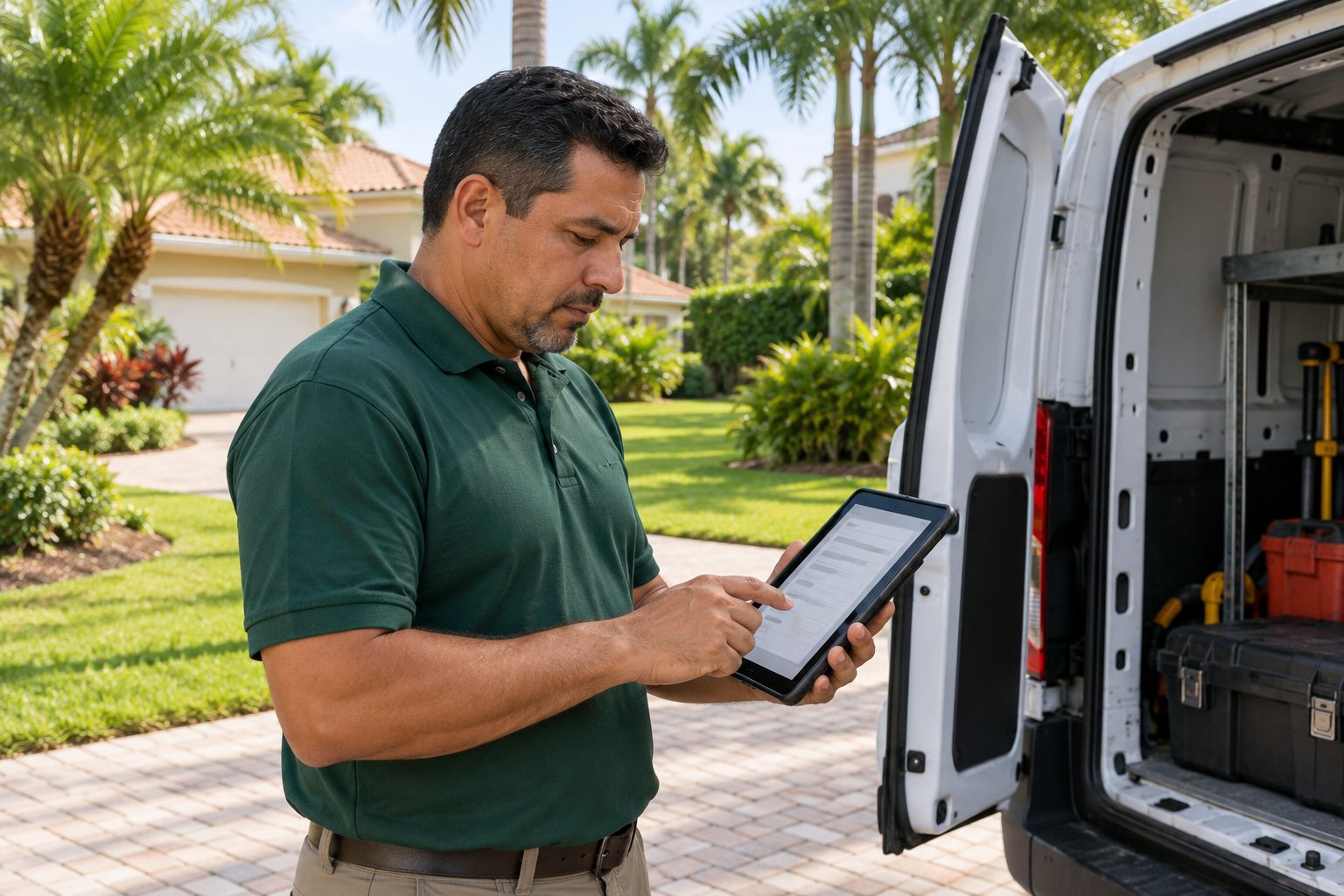
Now consider a fictional lawn-care business based in Davie that accepts recurring maintenance but does not offer tree removal. If its ads and website simply say landscaping, it may attract requests the crew cannot take. A useful agency recommendation would clarify the services, describe genuine coverage, and ask for enough information to evaluate the job.
That could mean a service-type choice, a service ZIP code, and a preferred contact method on the estimate form. Do not collect a full property history or sensitive information just to start a conversation. If coverage depends on route capacity, say that availability will be confirmed rather than implying that every address is accepted. Test where the request arrives and who follows up.
Google's service-area and hybrid business guidance distinguishes businesses that visit customers from those that also serve customers at their own address. Google says to remove the address from a Business Profile if customers are not served there. Ask the agency to review the actual business model before changing that profile; a service address is not automatically a public storefront.
Ask for evidence of fit, not a promise to own the map
A good proposal should explain why a channel fits the customer route. Search advertising may support a defined service request; local profile information may help someone evaluate a visit; social content may demonstrate a product or explain a process. These are planning hypotheses to test, not automatic outcomes. Ask which existing page needs work before another campaign or location page is created.
Google's local-ranking documentation explains relevance, distance, and prominence and says businesses cannot pay Google for a better local ranking. Be cautious of an agency that guarantees a particular map position throughout Davie. Ask instead how it will improve accurate business information, useful service content, and the customer path, and how it will report what remains outside its control.
Count the right outcome for each route
Keep a simple distinction between a website action and an accepted business opportunity. For a storefront, that may mean reviewing appointment requests and completed bookings separately. For a mobile service, separate estimate requests from requests that match the service and coverage. A tap on a phone number is not necessarily a connected call, and a sent form is not necessarily a qualified job.
For illustration only, suppose a campaign produces 20 forms, of which eight ask for a service the business does not provide and four come from outside its coverage. The useful next question is whether the ad wording, page, or form needs clarification, not whether the agency can produce 20 more forms. These invented numbers demonstrate the review process; they are not a benchmark or a claim about campaign performance.
Agree on minimal qualification labels and a review owner before launch. Use aggregated reporting and avoid putting customer names, addresses, or request details into analytics URLs. Evaluate a comparable period and explain small samples rather than declaring success from a handful of inquiries.
Bring a specific brief to the agency conversation
Before signing, ask the provider to show the proposed customer route, the website changes it includes, the profile information it will verify, and the test that demonstrates each change works. Confirm who controls the website and accounts, who handles incoming requests, and what needs a separate estimate. This turns a broad marketing package into work the business can review.
For a Davie business, the strongest starting point is the actual way you serve customers. iDvlpr Marketing's website and digital marketing services can be discussed around that specific workflow. Bring your current site and one customer journey to a conversation, whether the priority is making a location easier to visit or making service requests easier to assess.
All three photographs were generated with AI to illustrate fictional business settings. They do not depict an iDvlpr office, client, or documented project.